The two systems that decide whether your car stops and stays pointed where you aimed it. We measure, we show you, and then we quote.
Brakes are the most commonly upsold service in the business, which is exactly why we approach them the way we do: we measure pad thickness and rotor runout, we check fluid condition, and we tell you the actual numbers. If you have 6mm of pad left, you have time — and we’ll say so.
Suspension is the other half of the equation. Worn struts, bushings and control arms don’t just ride rough; they extend stopping distance, chew through tires, and make an otherwise healthy car feel old.
Any one of these is worth a phone call. Most of them are cheaper to fix now than in three months.
Squeal is usually the wear indicator doing its job. Grinding means metal on metal — come in now.
Almost always warped or unevenly worn rotors.
Air, moisture in the fluid, or a leak. This one is not worth waiting on.
Could be a sticking caliper, uneven pad wear, or an alignment and suspension issue.
Typically sway bar links, bushings, or worn struts and shocks.
A suspension symptom that shows up on your tire bill long before you feel it.
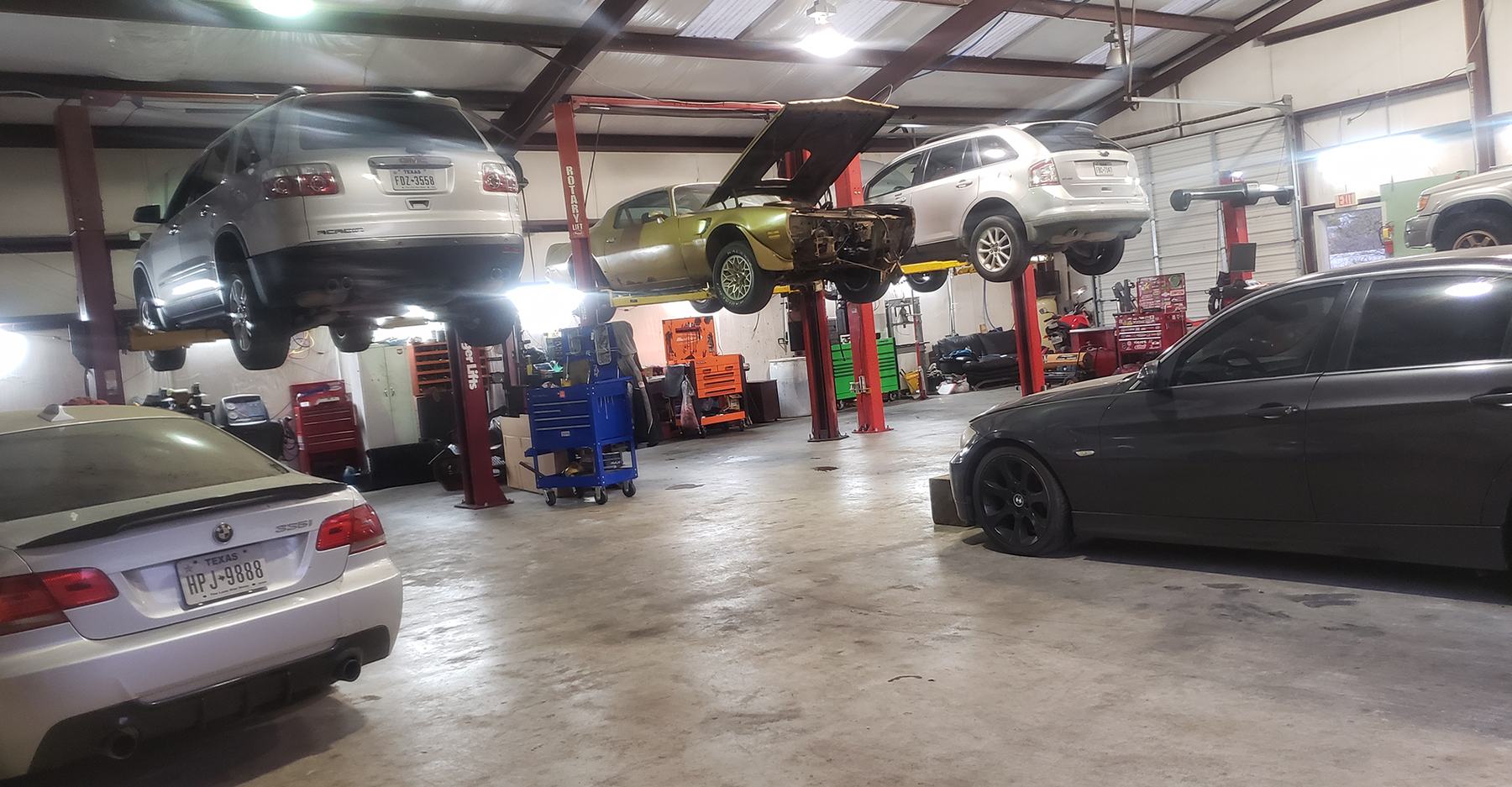
Pad thickness, rotor spec, fluid moisture content, and a full suspension inspection on the lift.
You get the real measurements and, when it helps, a look at the part in question.
Safety items first. Anything that can safely wait gets flagged for next visit, not sold today.
New brakes get properly bedded and road tested before the vehicle goes back to you.
Anywhere from 25,000 to 70,000 miles depending on the vehicle, the pad and how you drive. Stop-and-go commuting in Collin County traffic is on the shorter end of that range.
No. If the rotors are within spec and have no scoring or runout, they can stay. We measure rather than replacing them by default.
Most manufacturers call for every two to three years. Brake fluid absorbs moisture, which lowers its boiling point and can make the pedal feel soft under heavy use.
We handle the suspension repair and road test, and coordinate alignment so the work is done in the right order — there’s no point aligning a car with worn control arms.
Timing, gaskets, misfires and full rebuilds — diagnosed before anything gets quoted.
ExploreSlipping, harsh shifts and warning lights — diagnosed honestly, not assumed.
ExploreRecharge, leak detection, compressors and blend doors — the leak gets found.
Explore
Tell us what your vehicle is doing. We’ll tell you what it actually needs — and what it doesn’t.